
What Is a Worm Gearbox? Working Principle, Types and Applications
Below is complete, professionally written website blog content for Luminary Transmission Pvt. Ltd. It includes SEO-friendly headings, technical explanations, applications, FAQs and internal linking suggestions.
1. Introduction to Worm Gearboxes
Worm gearboxes are widely used mechanical power transmission systems in various industrial applications. They are designed to transmit rotational motion between two shafts, typically positioned at 90 degrees to each other, while reducing speed and increasing output torque.
A worm gearbox consists of two primary components: a worm shaft and a worm wheel. These components work together to provide controlled speed reduction, smooth operation and high torque output in a compact design.
Worm gearboxes are commonly used in manufacturing machinery, conveyor systems, packaging equipment, material handling systems, automation equipment and many other industrial applications.
Choosing the right gearbox is essential for achieving efficient machine operation, reliable performance and long-term productivity.
In this article, we will explore what a worm gearbox is, how it works, its different types, key advantages, industrial applications and important factors to consider when selecting one.
2. What Is a Worm Gearbox?
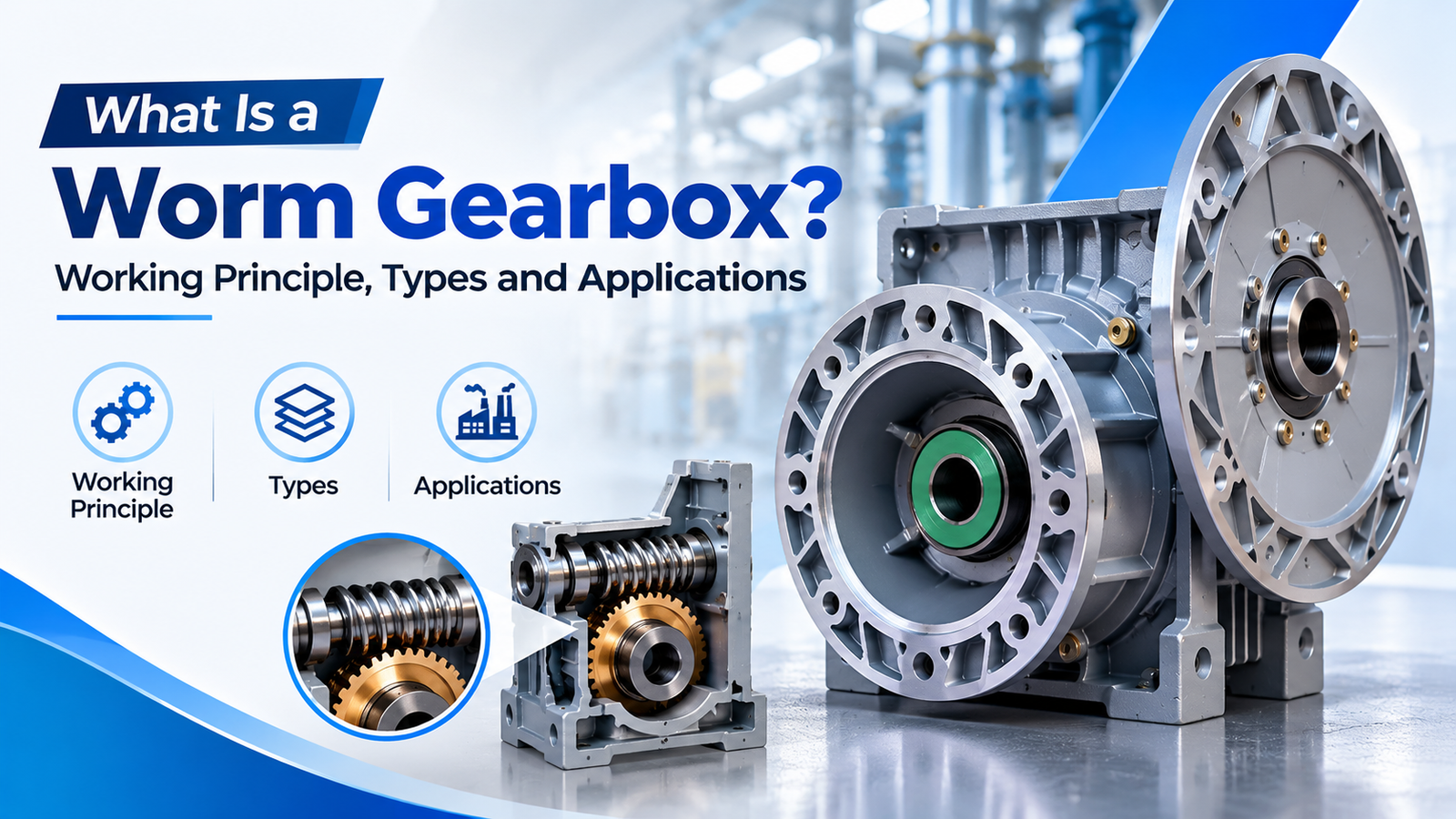
A worm gearbox is a mechanical speed reduction device that uses a worm (screw-shaped gear) and a worm wheel (gear wheel) to transmit power between two non-parallel, usually perpendicular, shafts.
The worm shaft rotates and engages with the teeth of the worm wheel. This interaction transfers rotational motion while reducing the output speed.
The reduction in speed allows the gearbox to deliver higher output torque, making it suitable for applications that require controlled movement and substantial driving force.
Main Components of a Worm Gearbox:
1. Worm Shaft:
A threaded, screw-like component that drives the worm wheel.
2. Worm Wheel:
A toothed wheel that meshes with the worm shaft.
3. Gearbox Housing:
Protects internal components and supports mechanical assembly.
4. Bearings:
Protects internal components and supports mechanical assembly.
5. Oil Seals:
Prevent lubricant leakage and protect internal components from contaminants.
6. Output Shaft:
Transfers the reduced-speed rotational power to the connected machine.
7. Lubrication System:
Helps minimize friction, wear and heat generation.
3. How Does a Worm Gearbox Work? (Working Principle)
The working principle of a worm gearbox is based on the interaction between a rotating screw-shaped worm and a toothed worm wheel.
When the input motor rotates the worm shaft, the threads of the worm engage with the teeth of the worm wheel. This engagement causes the worm wheel to rotate at a lower speed than the input shaft.
The difference in rotational speed creates a reduction in output speed and an increase in available output torque.
Step-by-Step Working Process:
Step 1: Power Input
An electric motor or another driving source supplies rotational power to the worm shaft.
Step 2: Worm Shaft Rotation
The worm shaft rotates and its helical threads engage with the worm wheel teeth.
Step 3: Motion Transfer
The rotating worm transfers motion to the worm wheel through continuous contact between their teeth.
Step 4: Speed Reduction
The worm wheel rotates more slowly than the worm shaft, depending on the number of worm starts and the number of worm wheel teeth.
Step 5: Torque Output
The reduced rotational speed produces higher output torque, subject to gearbox efficiency and mechanical losses.
4. Different Types of Worm Gearboxes
Worm gearboxes are available in different configurations depending on mounting requirements, torque capacity, operating conditions and industrial applications.
4.1 Single Reduction Worm Gearbox
A single reduction worm gearbox uses one worm shaft and one worm wheel to achieve the required speed reduction.
Key Features:
Compact construction.
Simple mechanical design.
Suitable for moderate speed reduction.
Easy integration into industrial machinery.
Applications: Conveyor systems, packaging machinery and material handling equipment.
5. How to Choose the Right Worm Gearbox?
Selecting the right worm gearbox is important for ensuring reliable operation, proper power transmission and equipment performance.
Key Features:
Before purchasing a gearbox, consider the following factors:
Selection Factor | What to Consider |
|---|---|
Input Power | Motor power in kW or HP |
Reduction Ratio | Required input-to-output speed reduction |
Output Torque | Torque required by the driven machine |
Input Speed | Motor or driving shaft RPM |
Mounting Type | Foot-mounted or flange-mounted configuration |
Operating Conditions | Temperature, environment and duty cycle |
Lubrication | Recommended lubricant and maintenance requirements |
Service Factor | Application load and operating conditions |
Important Tip: Always select a gearbox based on actual operating requirements rather than reduction ratio alone. Proper sizing helps avoid overloading, overheating and premature component wear.
6. Common Signs of Worm Gearbox Problems
Identifying gearbox problems early can help prevent unexpected machine downtime.
Some common warning signs include:
Excessive operating temperature.
Unusual mechanical noise.
Increased vibration.
Lubricant leakage.
Reduced output performance.
Abnormal wear of internal components.
If these signs appear, inspect the gearbox and consult a qualified technician or the manufacturer.
7. Why Choose Luminary Transmission Pvt. Ltd.?
At Luminary Transmission Pvt. Ltd., we understand the importance of dependable power transmission solutions in modern industrial operations.
Our focus is on engineering-oriented gearbox solutions designed to address diverse industrial requirements.
We emphasize:
Product-focused engineering.
Practical industrial applications.
Attention to product quality.
Reliable power transmission solutions.
Customer-focused support.
We aim to help businesses identify suitable gearbox solutions according to their machinery requirements and operating conditions.
Whether you are looking for a worm gearbox for manufacturing machinery, conveyor systems or other industrial applications, our team can help you explore suitable options.
8. Conclusion
Worm gearboxes play an important role in industrial power transmission by providing speed reduction, increased output torque and right-angle drive arrangements.
Their compact design, smooth operation and versatile mounting configurations make them suitable for a wide range of industrial applications.
Understanding their working principle, types, advantages and maintenance requirements can help businesses select the right gearbox for their machinery.
Choosing the correct gearbox according to operating conditions, torque requirements and application needs is essential for achieving reliable machine performance.
Luminary Transmission Pvt. Ltd. aims to support industrial requirements with engineering-focused transmission solutions.
Looking for a suitable worm gearbox for your application? Contact our team to discuss your requirements.
9. Frequently Asked Questions (FAQs)
Q1. What is the main purpose of a worm gearbox?
The main purpose of a worm gearbox is to reduce rotational speed, increase output torque and transmit power between two shafts, usually positioned at 90 degrees.
Q2. How does a worm gearbox work?
A worm gearbox works through the interaction of a screw-shaped worm shaft and a toothed worm wheel. The worm drives the wheel, creating speed reduction and increased output torque.
Q3. What are the main components of a worm gearbox?
The main components include the worm shaft, worm wheel, housing, bearings, oil seals, output shaft and lubrication system.
Q4. What are the common applications of worm gearboxes?
Worm gearboxes are commonly used in conveyor systems, packaging machinery, material handling equipment, manufacturing machinery and industrial automation systems.
Q5. Are worm gearboxes suitable for heavy-duty applications?
They can be used in selected heavy-duty applications when properly sized for the required torque, power, duty cycle and operating conditions.
Q6. What is the efficiency of a worm gearbox?
Worm gearbox efficiency varies depending on the reduction ratio, design, materials, lubrication, operating speed and load conditions. It should be checked using the manufacturer’s technical specifications.
Q7. How often should a worm gearbox be maintained?
Maintenance frequency depends on operating conditions and manufacturer recommendations. Regular inspection of lubrication, temperature, noise, vibration and leakage is important.
Q8. How do I select the correct worm gearbox?
Consider motor power, input speed, output torque, reduction ratio, mounting arrangement, operating conditions and service factor before selecting a gearbox.